

MULTI-ASSET CLASS MONITOR HIGHLIGHTS
WEEK ENDED AUGUST 28, 2026
Treasury curve flattens steadily even as outright yield levels seesaw
The term spread between 10-year and 2-year Treasury yields narrowed in the week ending August 28, falling to its tightest level in more than four weeks. The flattening move was largely one-directional, even though absolute yield levels initially fell and then rebounded over the course of the week.
Monday’s suggestions by Treasury officials that the agency could tap its near-$1tn General Account to help fund the expanded pace of bond buybacks announced in the previous week mostly affected the long end of the curve, depressing the 10-year yield by 4 basis points, while leaving the 2-year rate unaffected. Yields continued to descend the following day, when oil prices dropped by nearly 3% as the US government appeared to shift toward using economic sanctions rather than military strikes on Iran, though this time short and long yields both fell by around 6-7 basis points.
However, the moves were reversed after Kevin Warsh’s Jackson Hole address on Friday, in which he reaffirmed his bias toward ensuring price stability over supporting the economy, noting that “inflation remained too high” while “labor markets were stable, and output was solid.” Fed funds futures responded sharply by inverting the implied odds of a September hike from roughly 1-in-3 last Thursday to about 2-in-3 this week and fully pricing in a second hike for the first half of 2027. In response, the 2-year yield jumped 14 basis points on the day, compared to 6 basis points for the 10-year benchmark, leaving the latter largely flat for the week.
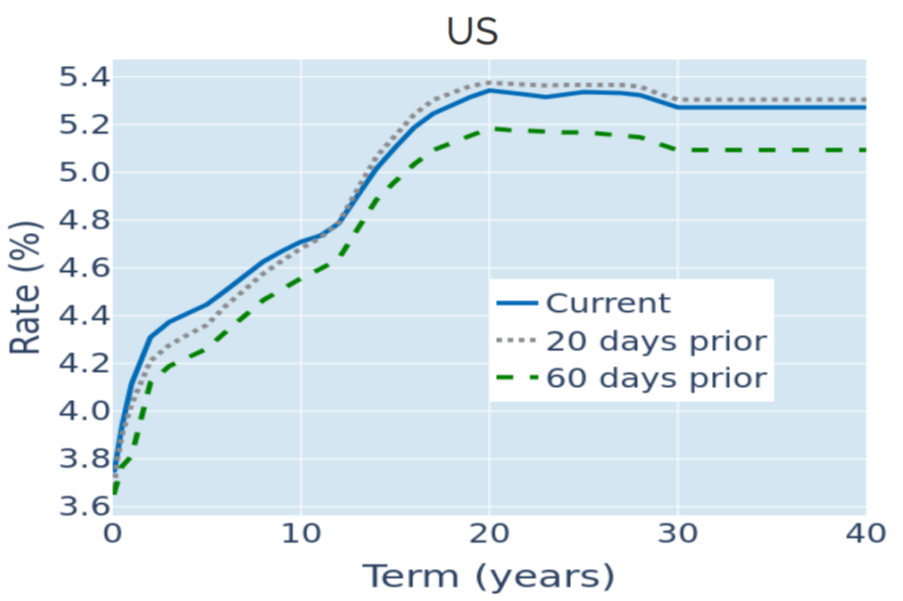
Please refer to Figure 3 of the current Multi-Asset Class Risk Monitor (dated August 28, 2026) for further details.
Dollar rebounds on hawkish Fed repricing while shrugging off falling long yields
The dollar once again showed a one-sided reaction to last week's bond market turbulence, seemingly insensitive to the falling long yields at the start of the week, but appreciating on the back of the monetary policy repricing after Kevin Warsh's Jackson Hole speech. This was almost the opposite of what happened in the week before, when the greenback weakened alongside lower long-term borrowing costs, while getting no support from higher short-term rates.
The renewed dollar strength meant that the yen has now depreciated over 2% since the start of August, having given up almost half of its gains from when Japanese and US authorities jointly intervened in late July.
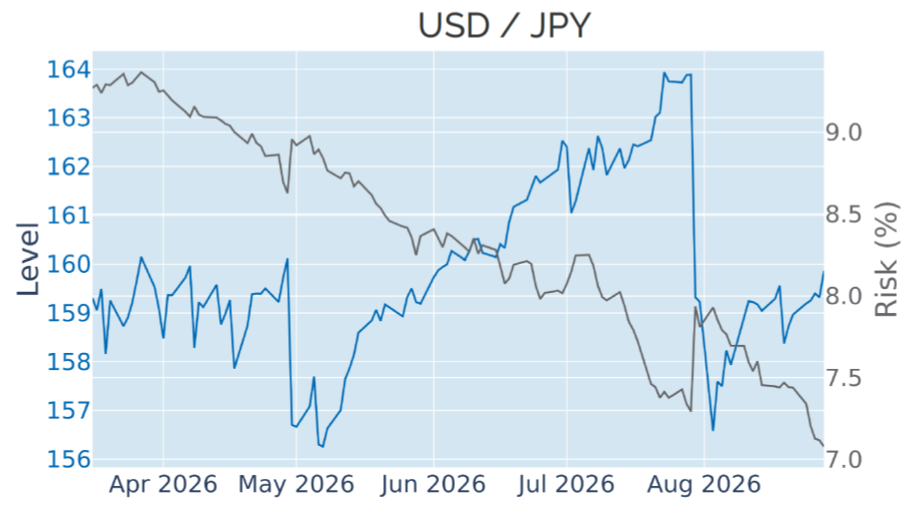
Please refer to Figure 6 of the current Multi-Asset Class Risk Monitor (dated August 28, 2026) for further details.
Portfolio risk falls for a third straight week as equity volatility keeps easing
The predicted short-term risk of the Axioma global multi-asset class model portfolio fell for a third consecutive week to 5.7% as of Friday, August 28, 2026, down from 6.6% the week before. The drop was driven almost entirely by lower equity volatility, which alone accounted for around 0.8 percentage points of the decline. The improvement was concentrated in US and developed non-US equities, which saw their percentage risk contributions shrink by 0.6 and 0.7 percentage points, respectively.
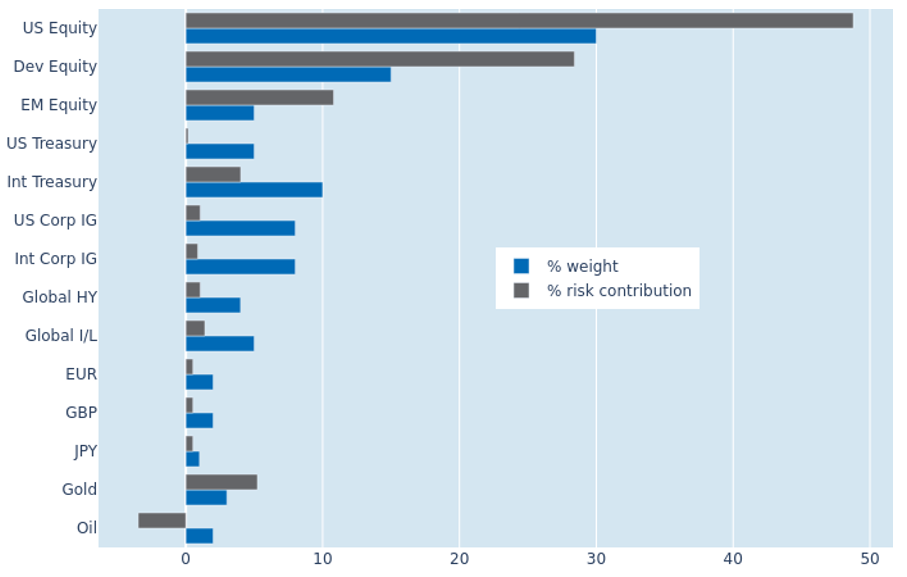
Please refer to Figures 7-10 of the current Multi-Asset Class Risk Monitor (dated August 28, 2026) for further details.
You may also like

