

MULTI-ASSET CLASS MONITOR HIGHLIGHTS
WEEK ENDED SEPTEMBER 18, 2026
Gilt and Treasury curves flatten from opposite ends
UK and US yield curves flattened sharply over the week ending September 18, 2026, as an oil driven selloff at the start of the week was followed by a sequence of central bank decisions that pulled short and long yields in different directions on each side of the Atlantic.
Gilt yields jumped across the curve on Monday, following a renewed surge in oil prices. But the move reversed on Wednesday, when the latest batch of UK inflation data suggested that higher energy costs had yet to feed through into the wider economy. Even though headline consumer price growth accelerated to 2.9% in July to 3.1% in August, core inflation held steady at 2.6% for a fourth consecutive month, while services inflation was unchanged at 3.4%.
The notion was confirmed by the Bank of England a day later, when the Monetary Policy Committee voted 6-3 to hold the base rate at 3.75%, noting that there had been "little evidence so far of material second-round effects in price and wage-setting." Alongside the decision, the Bank paused its gilt sale auctions for up to six months and confirmed it would permanently retain £120 billion of its longest-dated holdings with maturities from 2049 onward. The long end rallied sharply in response, with the 30-year yield falling 16 basis points on the day and ending the week 27 basis points lower, as the rally persisted into Thursday and Friday. The 2-year and 10-year points, on the other hand, partially reversed on stronger-than-expected UK retail sales, leaving the 10-year just 6 basis points lower, while 2-year was up 3 basis points, compressing the 2s10s spread to its lowest level since March.
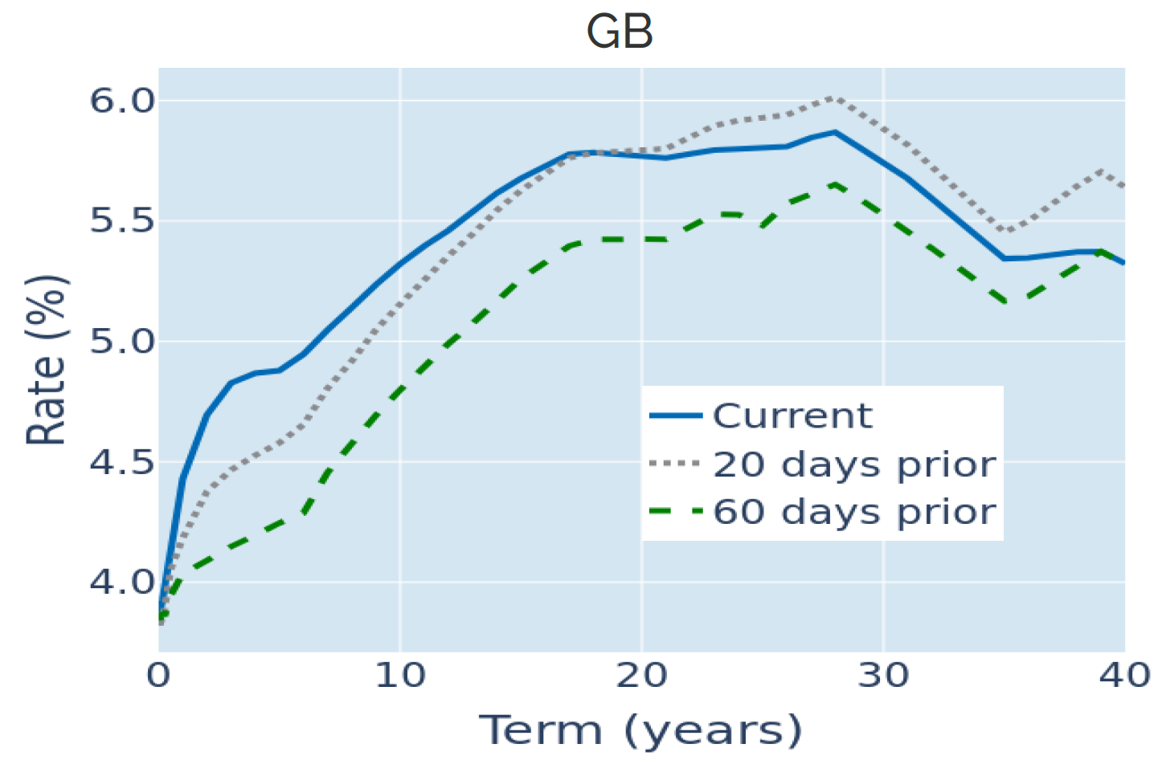
A similar pattern played out in the Treasury market, though for different reasons. Wednesday's Federal Reserve decision to raise rates by 25 basis points to 3.75%-4.00% — this one unanimous and also widely anticipated — moved almost exclusively the short end, with the 2-year yield rising 7 basis points against a 1-basis-point increase at the 10-year and a 1-basis-point decline at the 30-year points. At his press conference, Chair Kevin Warsh reiterated that the Committee's "predominant focus" remained price stability, stating plainly that "inflation is too high and has been for too long." The accompanying Summary of Economic Projections turned markedly more hawkish, with 16 of the 18 participants who submitted projections now expecting the federal funds rate above 4% by year-end, up from six in June.
As for the Gilts, Thursday brought a broad decline across the curve, before Friday reversed it just as broadly. The net effect over the week was a further flattening of the Treasury curve, with the 2-year yield rising 13 basis points against a 1-basis-point decline at the 30-year. The 2s10s spread ended the week at 25 basis points, its narrowest since March 2025, just before the Liberation Day tariffs triggered a sustained steepening.
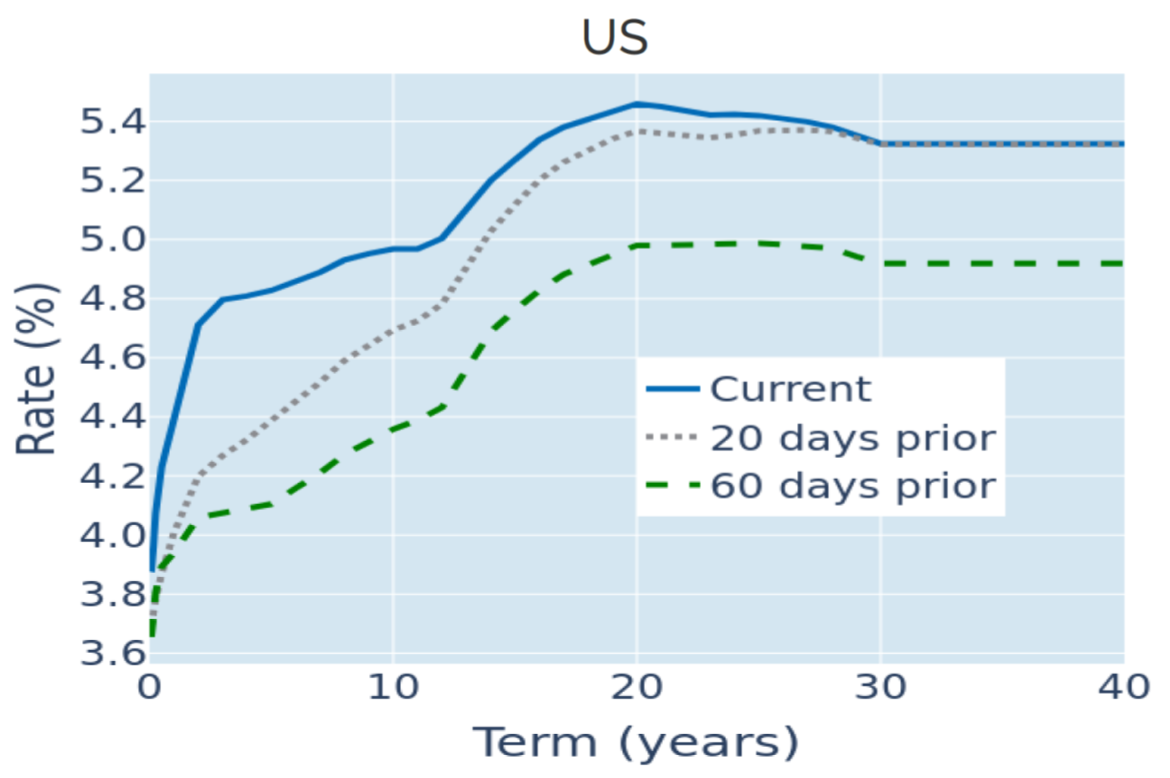
Please refer to Figure 3 of the current Multi-Asset Class Risk Monitor (dated September 18, 2026) for further details.
Hawkish Fed boosts the dollar, but yen still tumbles despite BoJ hike
The US dollar rebounded 1.1% against a basket of major trading partners last week, posting its strongest weekly return in three months. Most of the gain happened on the back of Wednesday’s hawkish signals from the Federal Reserve, with Fed funds futures traders further raising the implied probability of at least one more rate hike before year-end from around 75% to over 90%. There is now also a 44% chance priced in that the FOMC could tighten at both remaining meetings this year, up from 28% the week before.
The Japanese yen, in contrast, told the opposite story. Rather than strengthening on the Bank of Japan's own rate increase on Friday, the currency recorded its worst week in almost a year, falling 2.5% against its American rival. The asymmetric reaction reflects a pattern that has held for the past five years, in which higher rates have predominantly benefited the dollar, while other currencies' reaction to their own central banks' hikes has often been inverse.
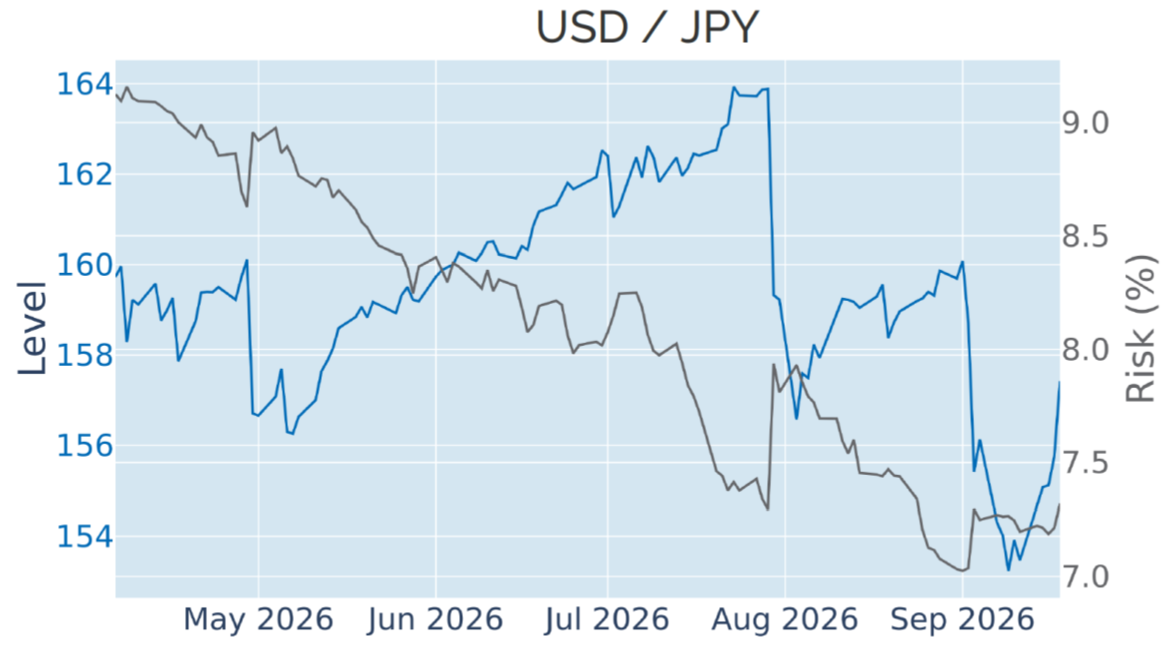
Please refer to Figure 6 of the current Multi-Asset Class Risk Monitor (dated September 18, 2026) for further details.
Lower equity volatility eases portfolio risk despite FX crosscurrents
Predicted short-term risk for the Axioma global multi-asset class model portfolio eased from 6.2% to 5.9% as of September 18, 2026, as a sharp decline in equity volatility outweighed stronger exchange rate fluctuations against the dollar. US equities were the major beneficiaries, with their share of total portfolio risk shrinking from 56.1% to 48.2%. The decline was partly offset by developed and emerging market stocks, whose risk contributions rose by 1.8 and 2.6 percentage points, respectively, as they moved into closer alignment with each other and with international government bonds — a co-movement pattern consistent with the broad dollar strength documented above. Gold remained the portfolio's riskiest asset relative to its weight, while oil continued to provide the largest diversification benefit per dollar invested, even as its risk-reducing effect narrowed slightly on the week.
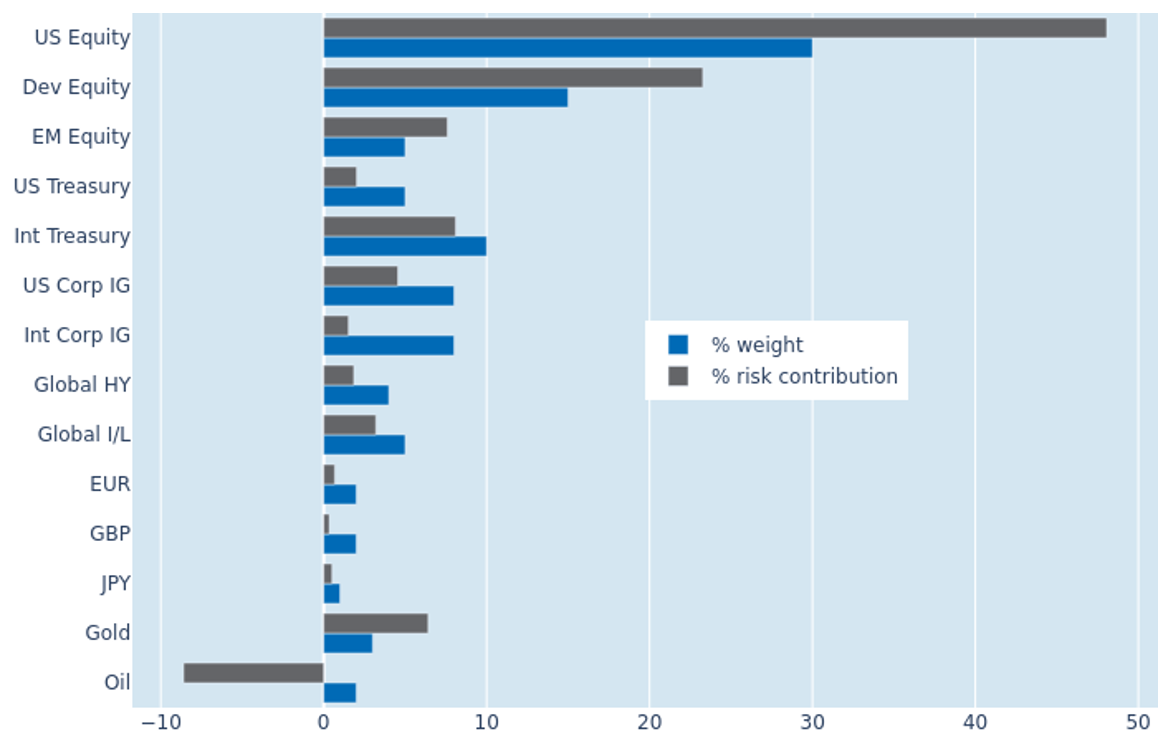
Please refer to Figures 7-10 of the current Multi-Asset Class Risk Monitor (dated September 18, 2026) for further details.
You may also like


