
MULTI-ASSET CLASS MONITOR HIGHLIGHTS
WEEK ENDED JULY 17, 2026
Global yields diverge as ongoing UK fiscal concerns outweigh cooling US inflation
Global bond yields diverged in the week ending July 17, 2026, as a downside surprise in US inflation dragged Treasury yields lower, while persistent fiscal concerns kept UK Gilts on an upward path.
Both markets started the week under pressure. A renewed outbreak of hostilities in the Middle East reignited fears over energy supplies and inflation on Monday, lifting the 10-year Treasury yield by 6 basis points and pushing the same-maturity Gilt benchmark 8 basis points higher to its highest level since May. The moves were underpinned by a repricing of monetary policy expectations, with short-term interest rate futures traders raising their year-end projection for the federal funds rate by 5 basis points to 4.02%. The revision was even more pronounced in the UK, where the 12-month SONIA forward rate soared by nearly 20 basis points, now implying more than half a percentage point of tightening over the coming year. The European Central Bank, meanwhile, is once again expected to raise rates twice more before year-end, on top of last month's 25-basis-point hike.
The bond markets on either side of the Atlantic started to diverge from Tuesday, however, after US headline inflation came in significantly below expectations, easing to 3.5% in the 12 months to June, down from 4.2% in May and undershooting the consensus prediction of 3.8%. The surprise was driven by a sharp 0.4% monthly fall in consumer prices, as energy costs tumbled 5.7%. The softer reading prompted traders to unwind the earlier hawkish repricing, leaving the 10-year Treasury yield 1 basis point below the previous Friday's close.
UK Gilts, by contrast, could not shake off their upward momentum. The 10-year borrowing rate ended the week 6 basis points higher, buoyed by mounting concerns over a potential fiscal policy shift under Andy Burnham's premiership.
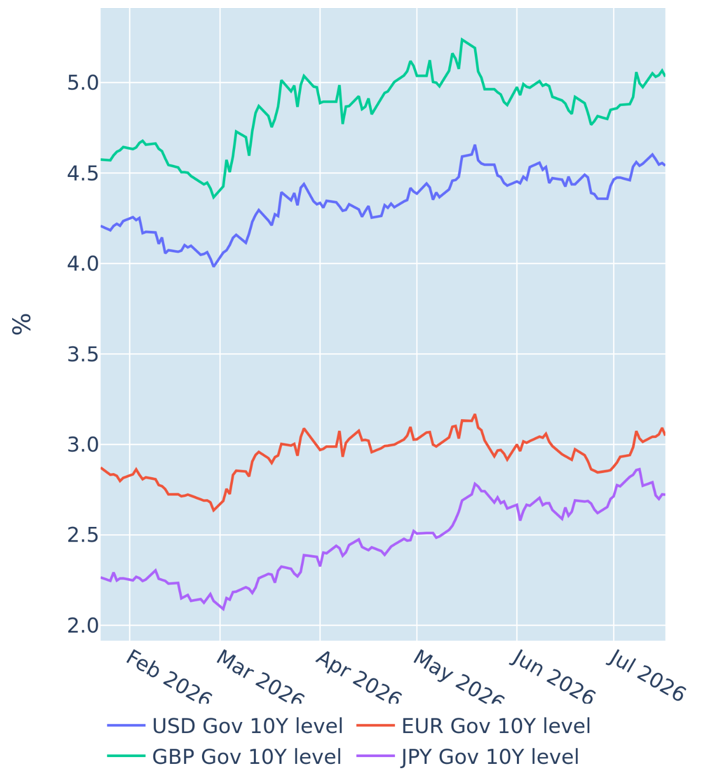
Please refer to Figure 4 of the current Multi-Asset Class Risk Monitor (dated July 17, 2026) for further details.
Currencies take their cue from local yields rather than Fed policy
Foreign exchange markets closely tracked regional interest rate movements in the week ending July 17, 2026, breaking the established pattern of simply following Fed monetary policy expectations.
The US dollar replicated the round-trip in Treasury yields, strengthening 0.3% against a basket of major trading partners on Monday, before reversing the gains on the back of Tuesday’s softer inflation print and leaving the Dollar Index 0.2% lower on the week.
Sterling, by contrast, took its cue from rising UK rates, strengthening 0.3% against its American rival as Gilt yields pushed higher. This marks the fourth consecutive week in which the pound and UK interest rates have moved in lockstep — the longest such stretch of co-movement since the tariff-induced capital flight from the US in early 2025.
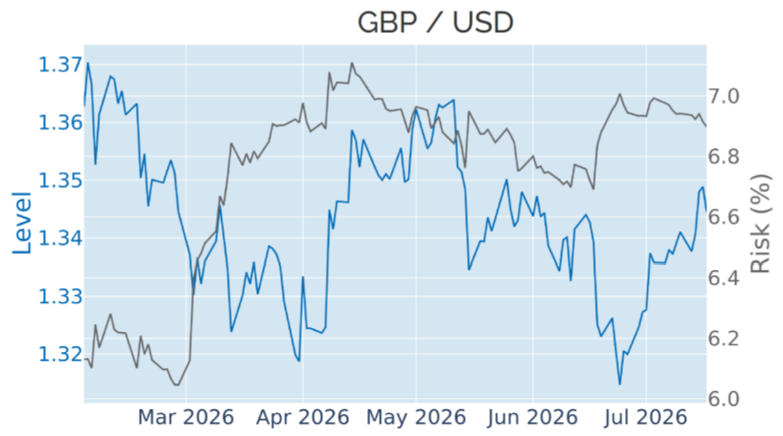
Please refer to Figure 6 of the current Multi-Asset Class Risk Monitor (dated July 17, 2026) for further details.
Falling equity volatility keeps driving portfolio risk lower
Predicted short-term risk for the Axioma global multi-asset class model portfolio fell sharply for a fourth consecutive week from 7.5% to 6.3% as of Friday, July 17, 2026. As in previous weeks, the decline was driven almost entirely by a further drop in standalone equity volatility.
Despite the substantial fall in overall risk, the breakdown by asset class was largely unchanged, as cross-asset correlations remained stable. This left gold the riskiest asset relative to its monetary weight, at nearly two-and-a-half times its 3% allocation, and oil the portfolio's sole diversifier.
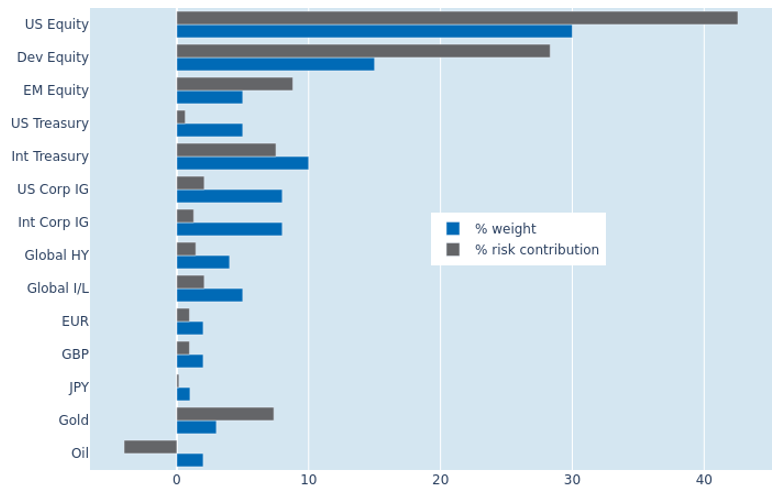
Please refer to Figures 7-10 of the current Multi-Asset Class Risk Monitor (dated July 17, 2026) for further details.
You may also like


