

MULTI-ASSET CLASS MONITOR HIGHLIGHTS
WEEK ENDED AUGUST 7, 2026
Prospects of US-Iran agreement and weak payrolls weigh on global bond yields
Sovereign yields retreated markedly on both sides of the Atlantic in the week ending August 7, 2026, amid signs of a prospective agreement between the United States and Iran early in the week, followed by a weak US labor market report on Friday. The 10-year Gilt fell 15 basis points between Monday and Wednesday, while the 10-year Treasury declined 9 basis points over the same period, as a sharp drop in oil prices eased concerns over renewed inflationary pressure. The move was partially reversed on Thursday, but the two benchmarks still ended the week down 0.11% and 0.09%, respectively, after the July non-farm payroll report showed a decline of 23,000 positions against a consensus forecast for an increase of 80,000. The shock was further compounded by a downward revision to June's figure from 57,000 to 20,000.
Interest rate markets repriced accordingly. The 10-month SONIA forward rate fell 18 basis points in the first half of the week and now implies only two Bank of England rate increases, down from almost three the week before. US short-term interest rate futures reflected a similar shift: the implied probability of a September Federal Reserve rate increase fell from approximately two-in-three at the start of the week to around 55% by Wednesday, before Friday's payrolls report inverted that balance outright, leaving markets pricing a 45% probability of an increase against 55% for a hold.
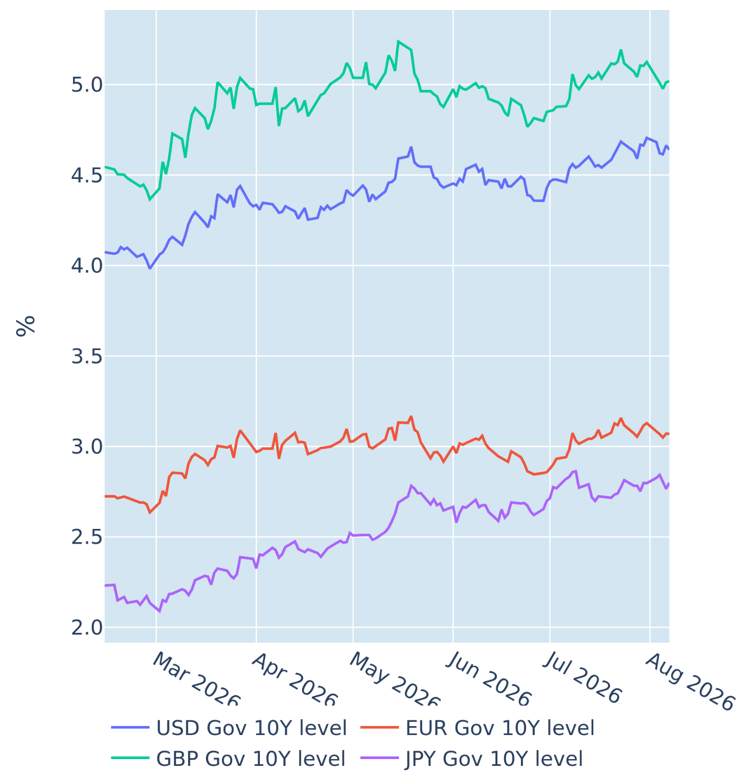
Please refer to Figure 4 of the current Multi-Asset Class Risk Monitor (dated August 7, 2026) for further details.
Yen appreciates further as dollar continues to track US short rates lower
The broader depreciation of the US dollar continued last week, consistent with the ongoing decline in US short-term interest rates. The yen was again the most notable mover, appreciating another 1.7% against the greenback on Monday, after Japanese authorities confirmed the previous week's joint intervention with the United States and stated they would not hesitate to intervene again if warranted. The move far outpaced the rest of G10, which mostly gained between 0.1% and 0.7%, leaving the Dollar Index down 0.4% over the week.
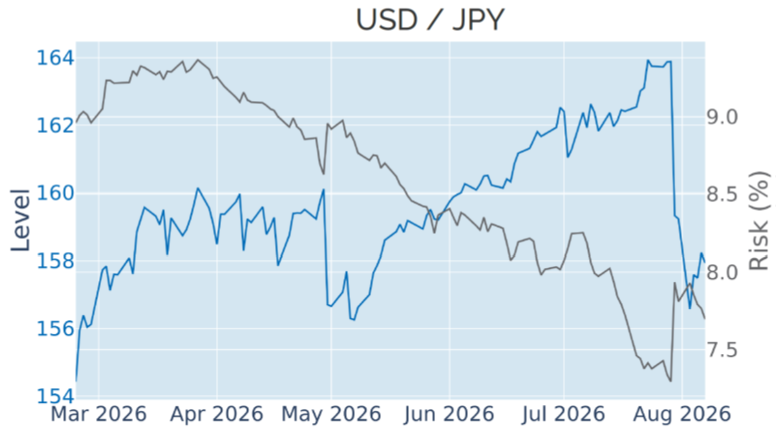
Please refer to Figure 6 of the current Multi-Asset Class Risk Monitor (dated August 7, 2026) for further details.
Portfolio risk surges as higher equity volatility outweighs easing oil prices
The predicted short-term risk of the Axioma global multi-asset class model portfolio surged by almost 2 percentage points to 7.9% as of Friday, August 7, 2026, as a marked rise in equity volatility outweighed the benefits of easing oil prices. US equities bore the brunt of this move, with their share of total portfolio risk expanding by more than 5 percentage points to 46.0%. Emerging market stocks added to it as well, as their percentage risk contribution climbed from 8.9% to 12.1%, leaving them the riskiest asset class in the portfolio relative to their 5% monetary weight. Oil's renewed negative correlation with almost all other assets in the portfolio once again made it the most effective diversifier, reducing overall risk by approximately 0.4 percentage points in absolute terms, or 5.6% relative to total portfolio volatility.
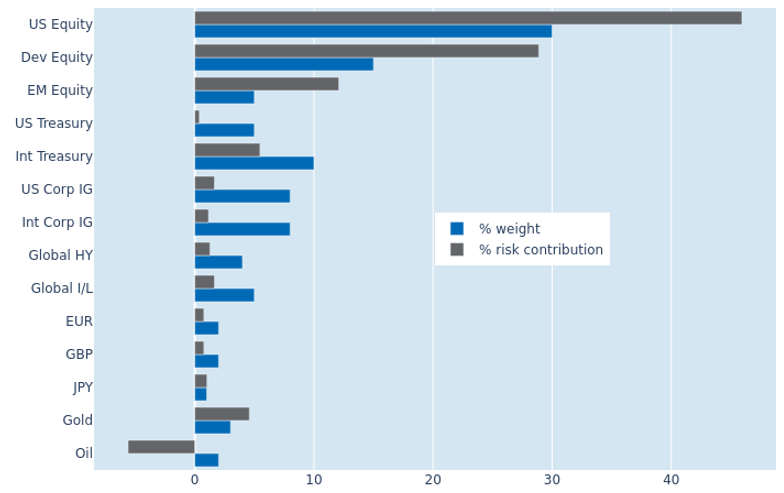
Please refer to Figures 7-10 of the current Multi-Asset Class Risk Monitor (dated August 7, 2026) for further details.
You may also like


