

MULTI-ASSET CLASS MONITOR HIGHLIGHTS
WEEK ENDED OCTOBER 2, 2026
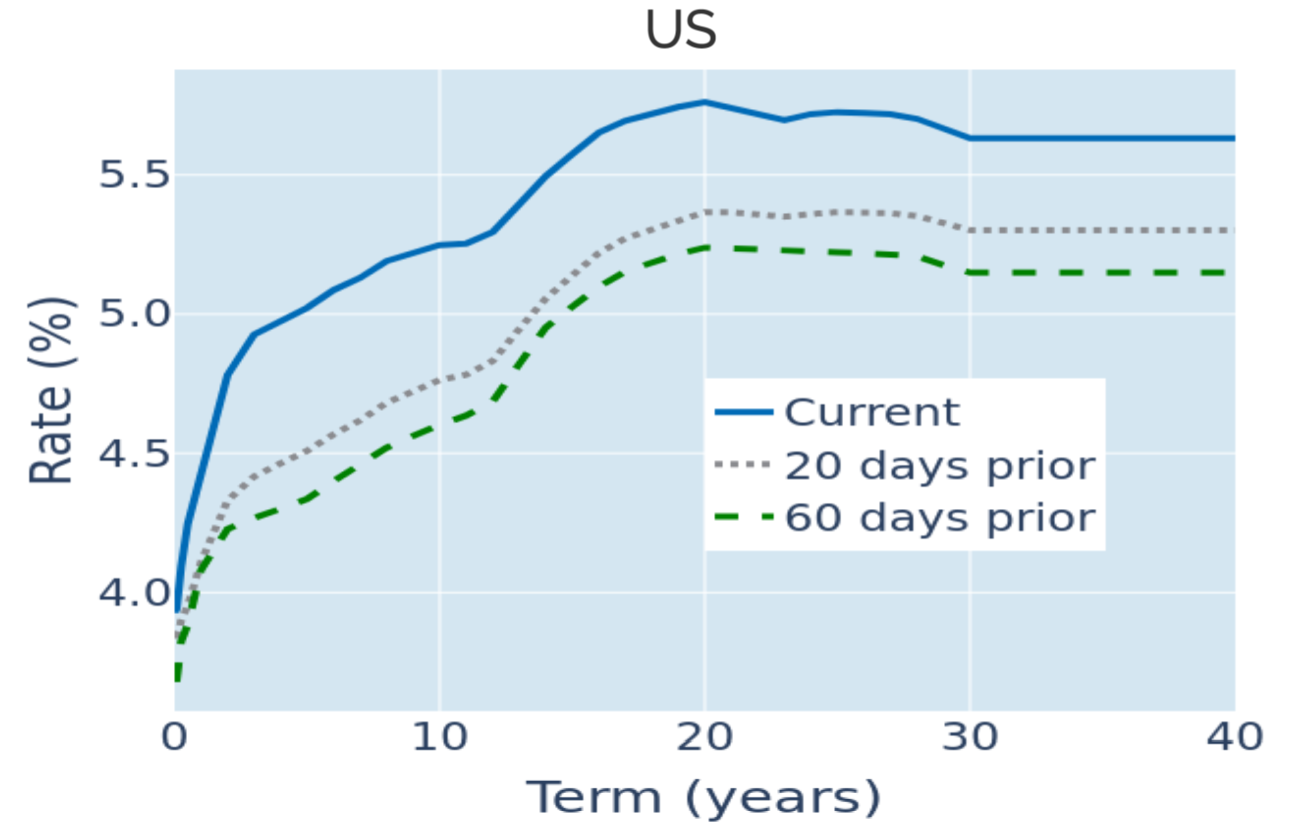
Oil surge and strong GDP drive long Treasury yields to 24-year high
The US Treasury curve continued to steepen in the week ending October 2, 2026, as a renewed oil price shock and an unexpectedly strong economic growth revision pushed long yields to their highest level in more than two decades, even as the short end priced out an imminent Fed rate hike.
Long yields climbed steadily over the first half of the week, as President Trump's rejection of Iran's proposal to reopen the Strait of Hormuz on Monday reignited the energy-shock narrative behind this year's inflation concerns. Wednesday's third estimate of second-quarter GDP, which was revised up from 1.5% to 2.2% per annum, then reinforced the case for continued economic resilience. In response, the 10-year yield climbed to its highest level since May 2002 on Wednesday, surpassing the previous 2007 peak and extending the recent expansion into a fifth consecutive week.
The short end, however, moved on a different timetable. After an initial surge on Monday, the 2-year yield descended once more over the following three sessions, as traders gradually pared the implied odds of an October rate increase to just over 20%, down from more than 70% on Monday. Friday's non-farm payrolls report underpinned the notion that the Fed may be in no rush to tighten monetary conditions, showing just 29,000 jobs added in September against a 90,000 consensus and compounded by a 59,000 downward revision to August.
Please refer to Figure 3 of the current Multi-Asset Class Risk Monitor (dated October 2, 2026) for further details.
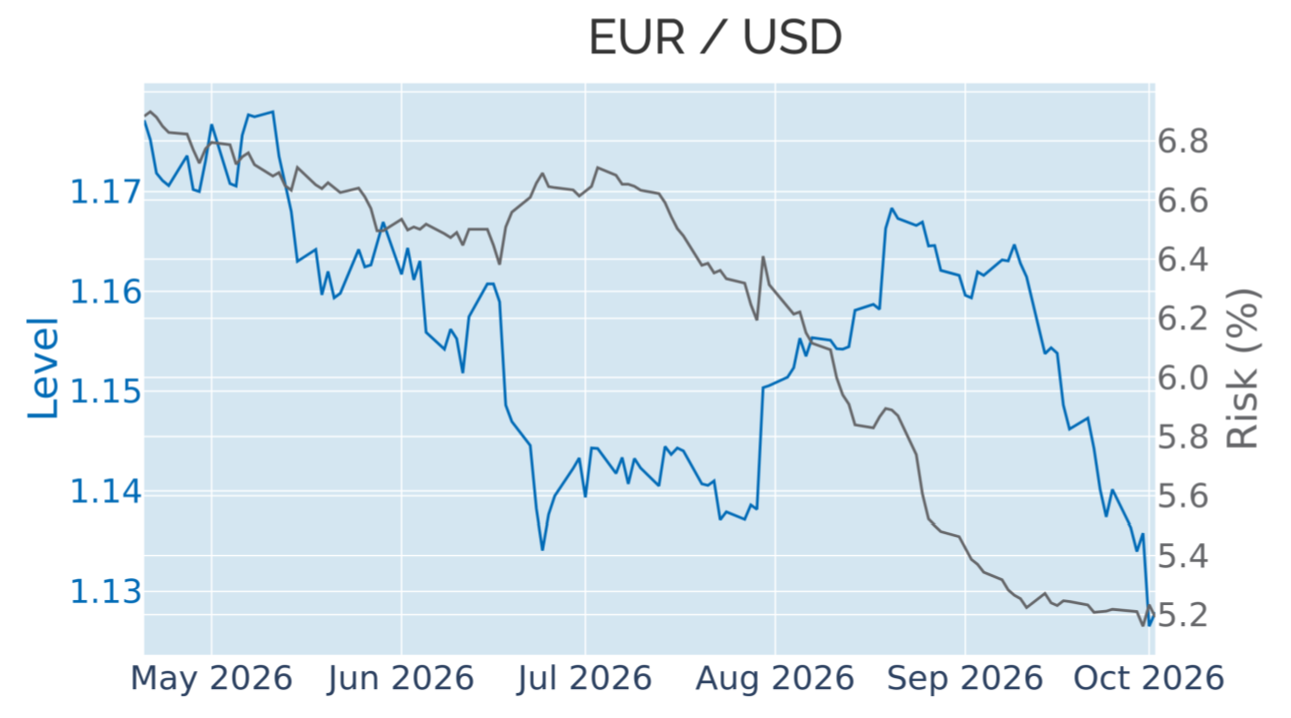
French fiscal crisis sends euro to a 17-month low
The euro weakened for a sixth consecutive week amid a deepening political and fiscal crisis in France, falling to its lowest level against the dollar since May 2025.
French budget negotiations deteriorated sharply over the week, as the opposition resisted Prime Minister Lecornu's proposed spending cuts and nationwide student protests against the austerity plan added to the sense of political paralysis. The resulting flight from French government debt widened the OAT-Bund spread to around 140 basis points, its widest level since the height of the Eurozone debt crisis in 2012. The move also extends a longer-running trend, as French borrowing costs progressively overtook Greece's in early June and then Italy's in mid-August, eroding the traditional core-periphery hierarchy within the single currency area.
The flight from French debt also appears to have reinforced a safe-haven bid for German Bunds, whose yields declined over the week even as the broader rise in US yields might otherwise have been expected to pull them higher.
Please refer to Figure 6 of the current Multi-Asset Class Risk Monitor (dated October 2, 2026) for further details.
Lower equity volatility and weaker FX-rates link ease portfolio risk
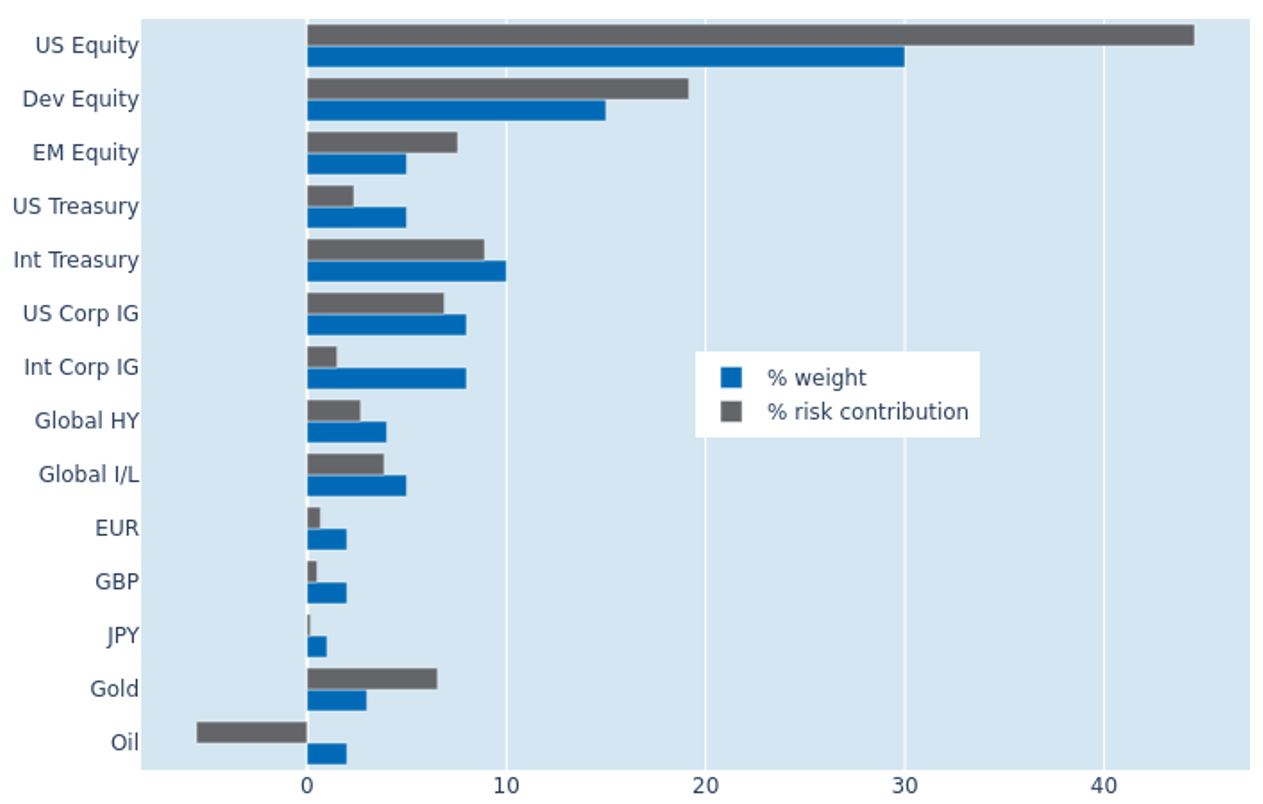
Predicted short-term risk for the Axioma global multi-asset class model portfolio eased from 6.3% to 5.9% as of Friday, October 2, 2026, as a decline in equity volatility was reinforced by a weaker co-movement between FX and interest rate returns. Non-US developed equities reaped the greatest benefit from the lower standalone volatility, with their share of total portfolio risk falling from 22.1% to 19.0%. The corresponding reduction for US equities of 0.4 percentage points was far more muted, though, as the effect of lower standalone volatility was counteracted by a less inverse relationship with oil prices. The same dynamic also curtailed oil's own diversification benefit, with its risk-reducing contribution narrowing from -8.9% to -5.6%.
Please refer to Figures 7-10 of the current Multi-Asset Class Risk Monitor (dated October 2, 2026) for further details.
You may also like
.jpg%3Fh%3D811%26iar%3D0%26w%3D1080&w=3840&q=75)

