

MULTI-ASSET CLASS MONITOR HIGHLIGHTS
WEEK ENDED NOVEMBER 6, 2026
Yields continue to fall as AI concerns override hawkish macro data
US Treasury yields fell for a fifth consecutive week in the week ending November 6, 2026, amid ongoing concerns about AI financing in the wake of the US mid-term elections, even as many macroeconomic data points, such as persistent inflation, further monetary tightening, and a solid labor market, would ordinarily have argued for higher borrowing costs.
Eurozone consumer prices rose by 4% in the 12 months to October, according to Eurostat’s flash estimate on Wednesday, up from 3.8% in September. The Bank of England then raised its base rate to 4% in line with market expectations on Thursday, with many of the rate setters pointing out the need for additional tightening and one member even voting for a 50-basis point increase. The Bank’s latest economic projections further showed that CPI inflation is now expected to climb to 5% by the middle of next year. Friday’s October US non-farm payroll report capped a week of hawkish data releases, coming in 100,000 above the consensus forecast of 65,000 new jobs, while September’s number was revised upward from 29,000 to 60,000. The healthy reading underpinned the Fed’s assessment of strong economic growth from the previous week’s FOMC meeting.
In response, traders on both sides of the Atlantic upped their near-term monetary policy expectations, with the probability of another Fed rate hike in December approaching 80%, while there is also now a 50% chance that the BoE might fit in one more tightening move before the year is out. Yet this did little to offset the wider drop in yields, fueled by Thursday’s sharp selloff in tech and AI-related stocks over fears that the Democratic landslide victory in Tuesday’s midterm elections could hamper the construction of data centers.
Borrowing rates plummeted across all maturities. At the short end, the terminal base rate implied by SONIA forwards for the middle of next year fell to 4.75%, down from 5% only a week and a half earlier, while Fed funds futures traders cut the chances of more than two further rate hikes from one in three to one in five. The dovish repricing propagated further along the respective yield curves, with the 10-year Gilt and Treasury benchmarks ending the week 13 and 8 basis points lower.
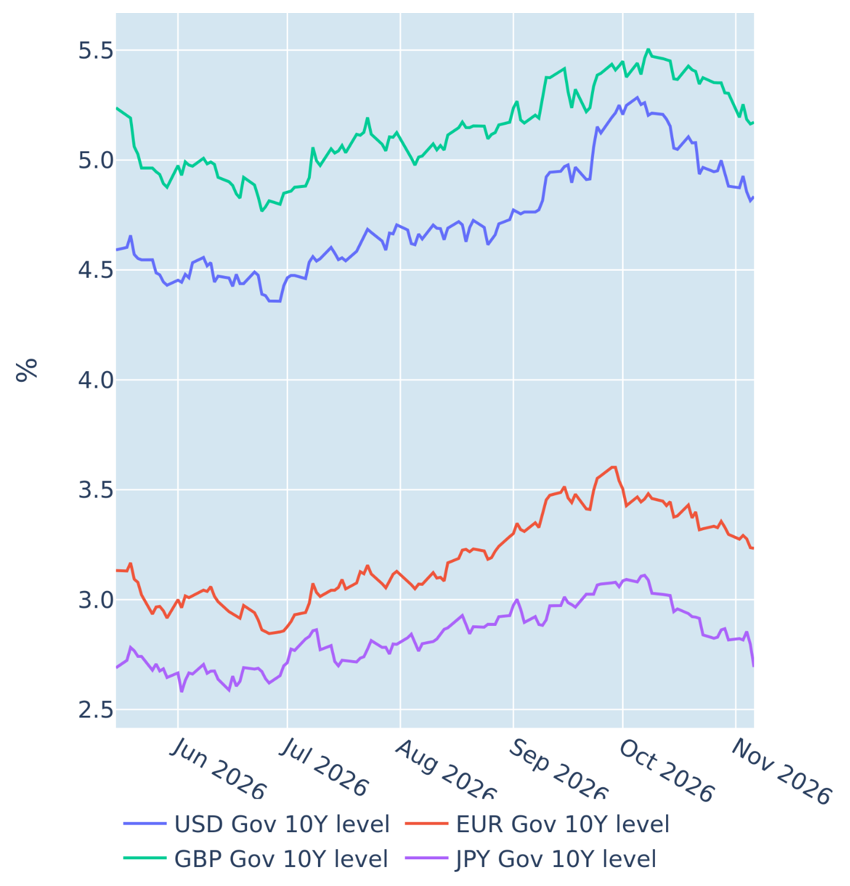
Please refer to Figure 4 of the current Multi-Asset Class Risk Monitor (dated November 6, 2026) for further details.
US equities dominate portfolio risk as selloff extends into fourth week
Predicted short-term risk for the Axioma global multi-asset class model portfolio jumped from 4.4% to 5.4% as of Friday, November 6, 2026, driven predominantly by a surge in equity volatility, as the AI-related selloff in the American stock market extended into its fourth week. US equities took the brunt of the increase, with their share of total portfolio risk expanding from 57.4% to 81.0%, making them by far the single-biggest contributor at 2.7 times their monetary weight of 30%. The rise was only partly tempered by the renewed inverse interaction between equity and interest rate returns, which meant that the fixed income portion of the portfolio saw its combined percentage risk contribution drop by 13.3 points. Non-US government bonds recorded the biggest reduction of 4.8 points within that group, as the negative correlation between share prices and exchange rates against the dollar further augmented their counter-movement against US stocks. The GBP and JPY cash holdings even showed small negative contributions of -0.1% and -0.2%, respectively, alongside US Treasury bonds, which once again actively reduce overall volatility. Oil just about remained the biggest subtractor at -0.9%, although it saw its diversification benefits severely curtailed from previously -3.5%, due to the fact that its price fell alongside equities last week.
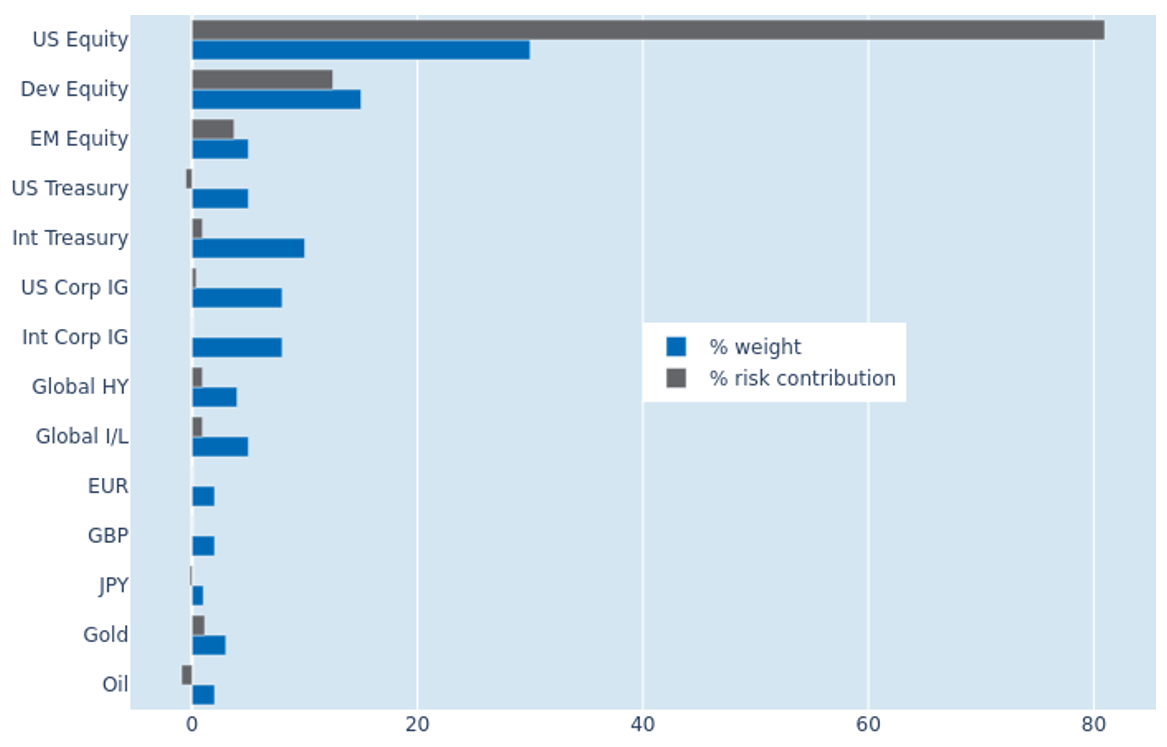
Please refer to Figures 7-10 of the current Multi-Asset Class Risk Monitor (dated November 6, 2026) for further details.
You may also like


