

EQUITY RISK MONITOR HIGHLIGHTS
WEEK ENDED OCTOBER 30, 2026
Axioma Risk Monitor: Small Caps rebound as smaller names in Health Care take the lead; South Korea’s shrinking weight lowered Emerging Markets risk in October; In Europe and the UK, Energy has outpaced the market by 35 points since February
Small Caps rebound as smaller names in Health Care take the lead
Although the US election is dominating the discussion of the near-term market impact, it is important to note that other factors are also at play. We don’t know the election outcome as of this writing, so we wanted to focus on other issues that impact stocks in the short term.
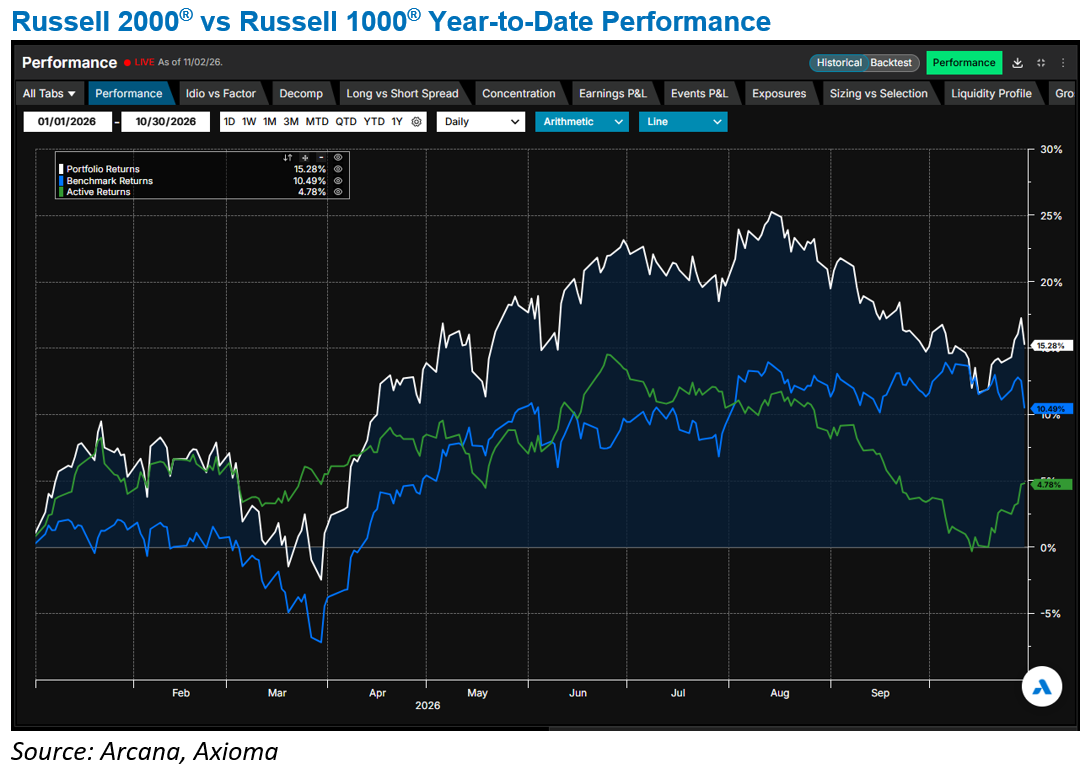
Ahead of the US elections, US small caps have rebounded over the past two weeks after a prolonged selloff left them relatively depressed. The Russell 2000 gained 3% over the last 10 business days, while the Russell 1000 slipped 1%. Small caps had built a commanding lead in 2026 by mid-August, outpacing large caps by more than 10 percentage points. But fears of higher interest rates then weighed heavily on smaller, typically more leveraged companies. From mid-August to mid-October, the Russell 2000 fell 11%, compared with a 1% decline for the Russell 1000, erasing that lead. The latest rebound has put small caps back ahead year to date.
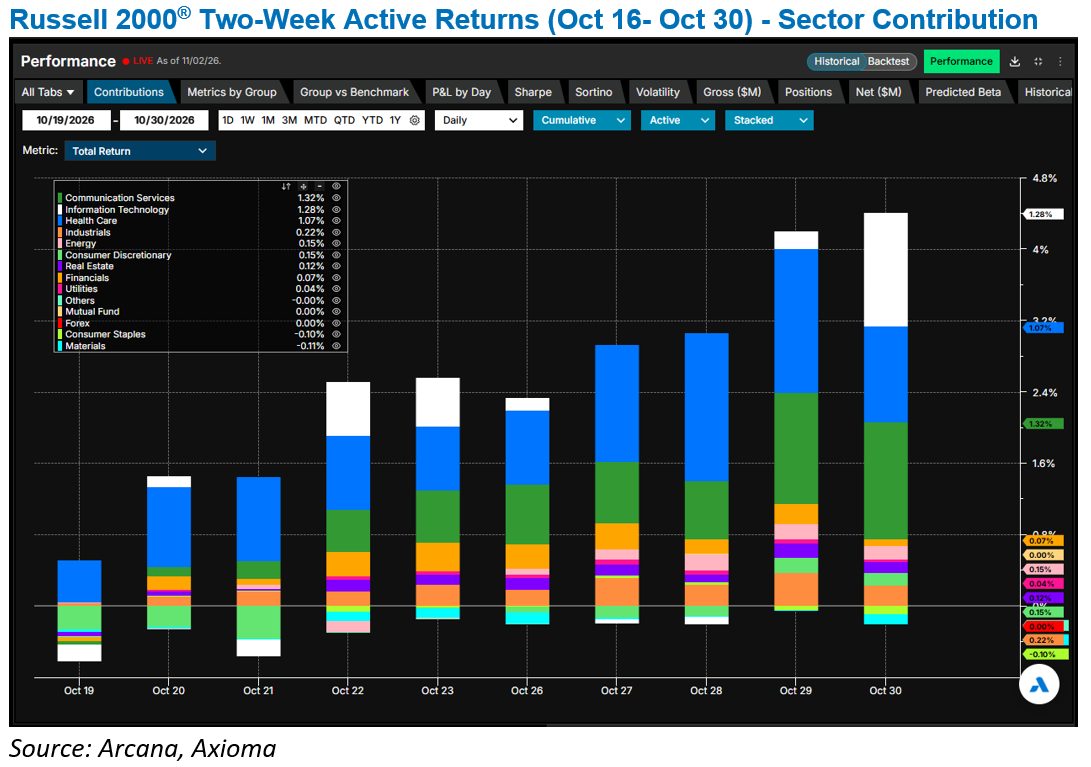
Health Care and Information Technology led the small-cap rebound, posting the strongest gains and driving about two-thirds of the index’s advance. Health Care, the Russell 2000’s largest sector, rose 8% over the past two weeks and accounted for nearly half of the index’s gain. Small-cap Information Technology advanced 4%, while its large-cap counterpart fell 2%. The Russell 1000 was also held back by a 13% drop in Communication Services, which makes up about 9% of the large-cap index. Meanwhile, Communication Services rose 1% in the Russell 2000, making only a minor contribution to the index’s gain because of its small weight.
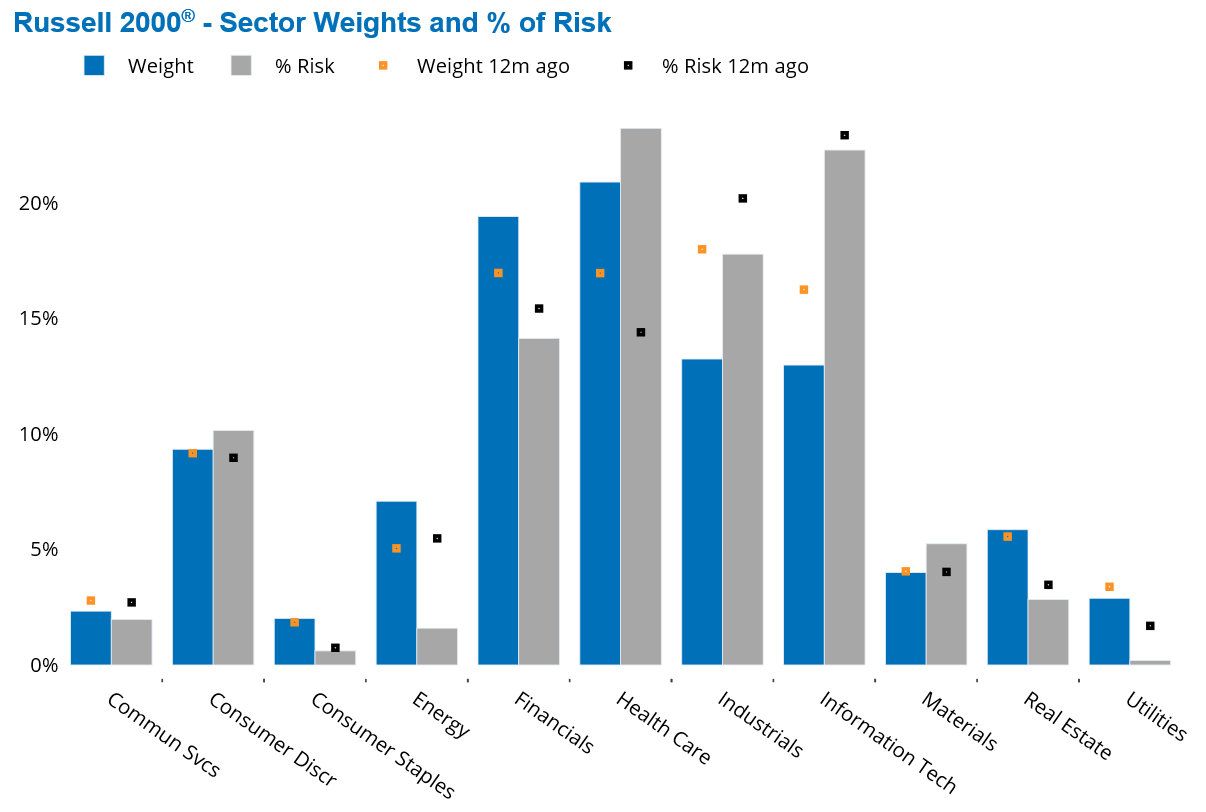
The same two sectors are also the biggest sources of small-cap risk. According to the Axioma US small-cap fundamental medium-horizon model, Health Care now accounts for 23% of Russell 2000 risk while representing 21% of the index, making it the largest sector risk contributor. Health Care’s weight has risen about four percentage points over the past year, and its share of risk has risen more than twice as much. A year ago, its risk contribution did not exceed its index weight.
Information Technology contributes almost as much risk, at 23%, roughly unchanged from a year ago, even though its weight in the Russell 2000 has fallen to 13% from 16%. Together, Health Care and Information Technology now account for nearly half of Russell 2000 risk.
The chart below is not included in the Equity Risk Monitors but is available upon request:
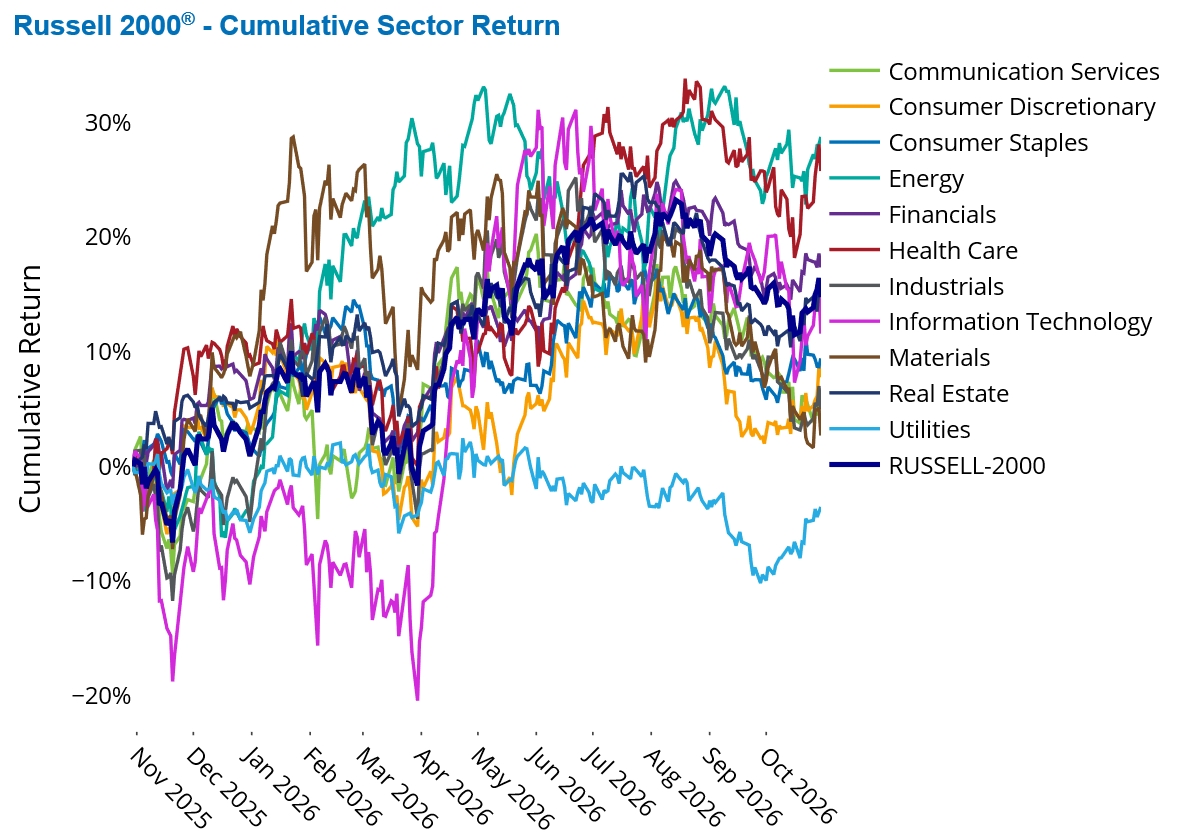
See charts from the Russell 2000 Equity Risk Monitor as of October 30, 2026:
South Korea’s shrinking weight lowered Emerging Markets risk in October
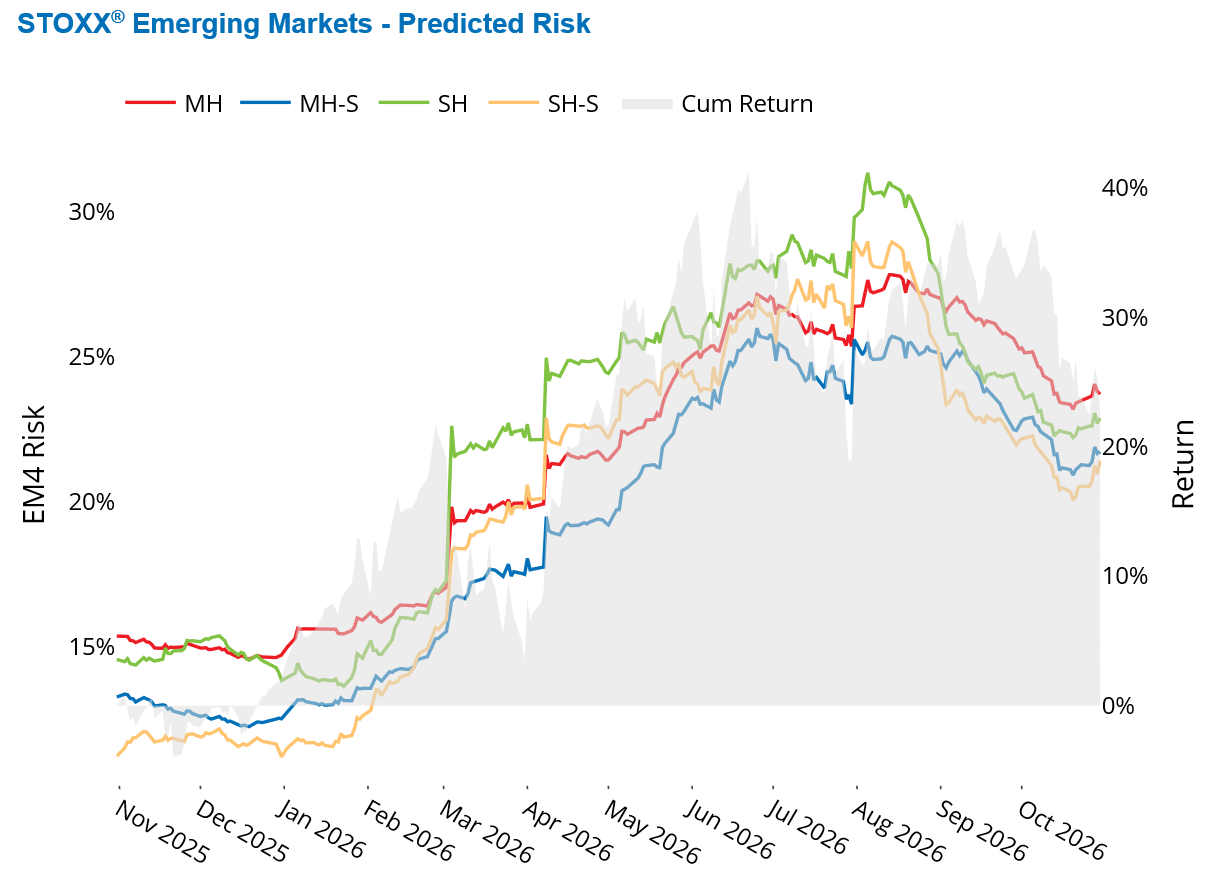
Despite October’s tech turmoil, which heavily impacted Emerging Markets, overall Emerging Markets risk declined, largely because South Korea’s footprint in the index shrank.
Predicted risk for the STOXX Emerging Markets Universal Index slipped one percentage point last month, according to the Axioma EM4 fundamental short-horizon model. Most of that decline, came from the drop in South Korea’s index weight.
Korean stocks lost about 15% in October, deepening a slide that began at the end of June. By the end of October, South Korea’s weight in the index had fallen to 18%, from 19% at the end of September and nearly 24% at the end of June. South Korea is the most volatile of the index’s four largest markets, with standalone volatility of 52%, compared with 35% for Taiwan. Each percentage point of weight it loses therefore removes a disproportionate amount of benchmark risk.
That effect partially reversed last week, when Korean stocks rebounded 4%. The rally lifted South Korea’s weight slightly, and STOXX Emerging Markets risk rose with it.
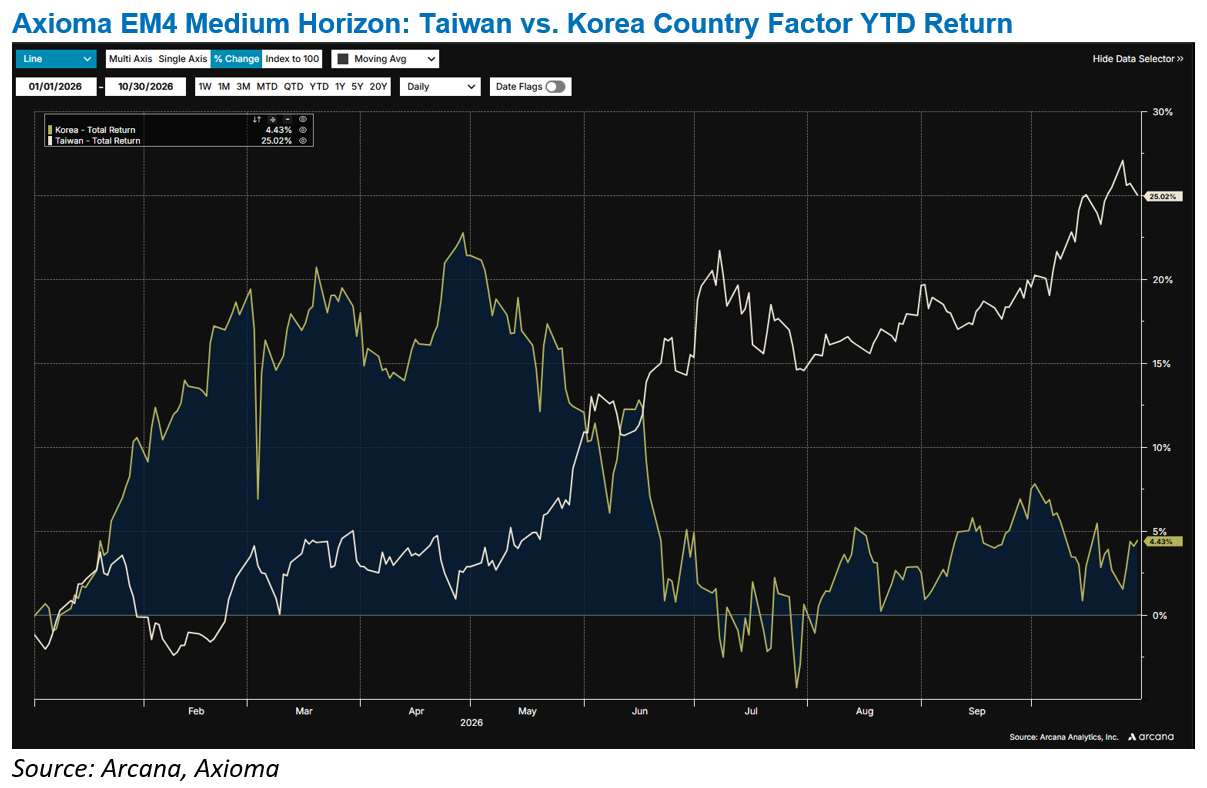
Beneath their shared exposure to chipmakers, South Korea and Taiwan move differently. In the same model, the Taiwan country factor and the Korea country factor capture what each market’s stocks have in common after accounting for broad-market, industry and style effects.
During the October chip selloff, the Taiwan country factor sharply outperformed the Korea country factor, a divergence seen in only 4% of two-week periods since 1996. The pattern reversed during last week’s rebound, but year-to-date performance still strongly favors the Taiwan country factor which is up 25%, compared with 4% for Korea’s country factor. The Korea country factor accounted for 4.6% of STOXX Emerging Markets variance on 30 October, three times the Taiwan country factor’s share.
Concentration, meanwhile, has continued to rise. Together, Taiwan and South Korea represent 79% of STOXX Emerging Markets risk while representing just 46% of its weight, up from 75% of risk at the end of June. TSMC, Samsung Electronics and SK Hynix alone account for 52% of the risk with a 26% combined weight.
See charts from the STOXX Emerging Markets Equity Risk Monitor as of October 30, 2026:
In Europe and the UK, Energy has outpaced the market by 35 points since February
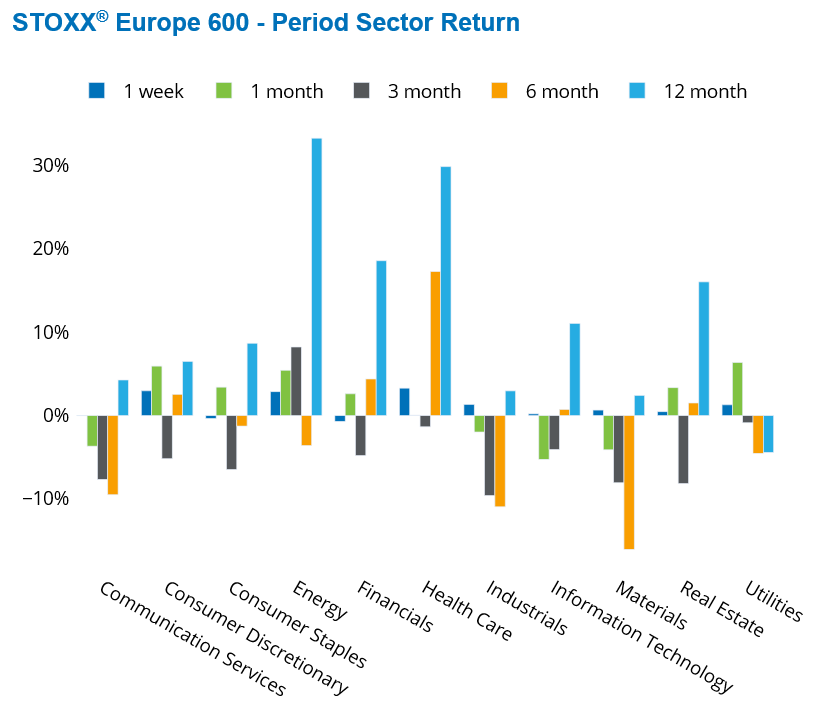
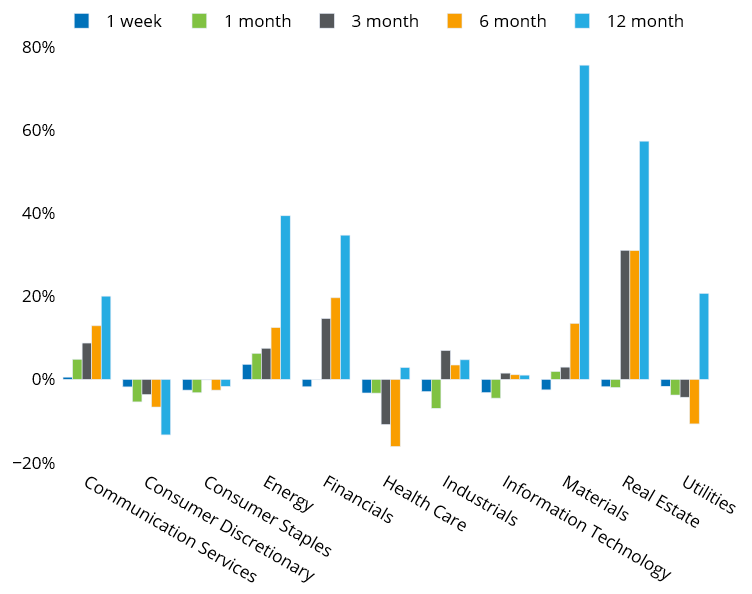
Since the US–Iran conflict began at the end of February 2026, Energy has outperformed its benchmark in ten of the twelve major markets we track. The lead was widest in the STOXX Europe 600 and STOXX UK, where Energy stocks rose 39% and 34%, respectively, putting them about 35 percentage points ahead of their indices. Energy also beat its benchmark by more than 20 points in Australia, China, Developed Markets ex-US and Asia-Pacific ex-Japan. In China, however, that lead largely reflects the index’s 19% decline, as Energy stocks gained only 5%.
The gains were far smaller in the large energy-importing markets. Energy rose just 2.5% in Emerging Markets and fell 1% in Japan, one of only two markets where it trailed its index. The other was the Russell 2000, where it lagged by a fraction of a point.
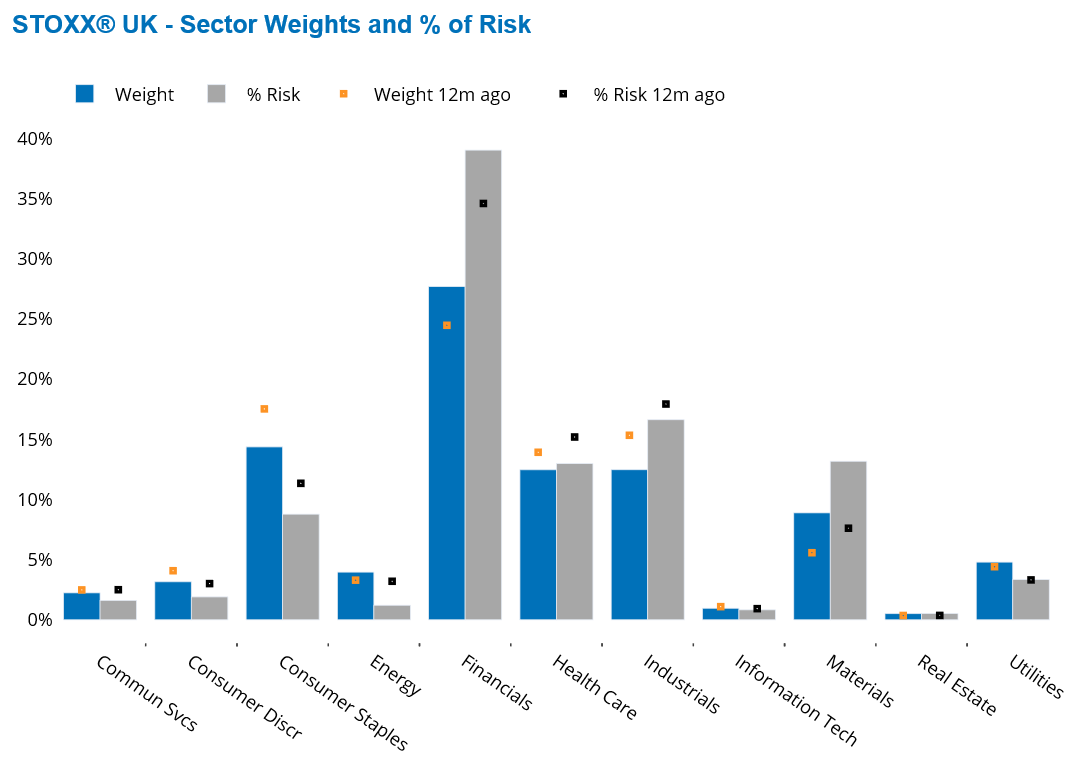
Energy’s contribution to overall returns depended on both its weight and the performance of the rest of the market. In the STOXX Europe 600, Energy accounted for more than 40% of the index’s 4.5% gain since the end of February, second only to Financials. In the STOXX UK, Energy added more than 1 percentage point despite a weight below 4%, the largest contribution of any sector, while the index as a whole slipped 0.2%. Without Energy, the UK market would have lost more than 1%.
Energy’s impact was more limited in markets where it carries little weight. In both the STOXX Developed World and the Russell 1000, where Energy represents about 4% of the index, it accounted for 13% or less of the return. In contrast, in Canada, where its weight is about 17%, Energy was responsible for about 40% of the index’s 8% gain.
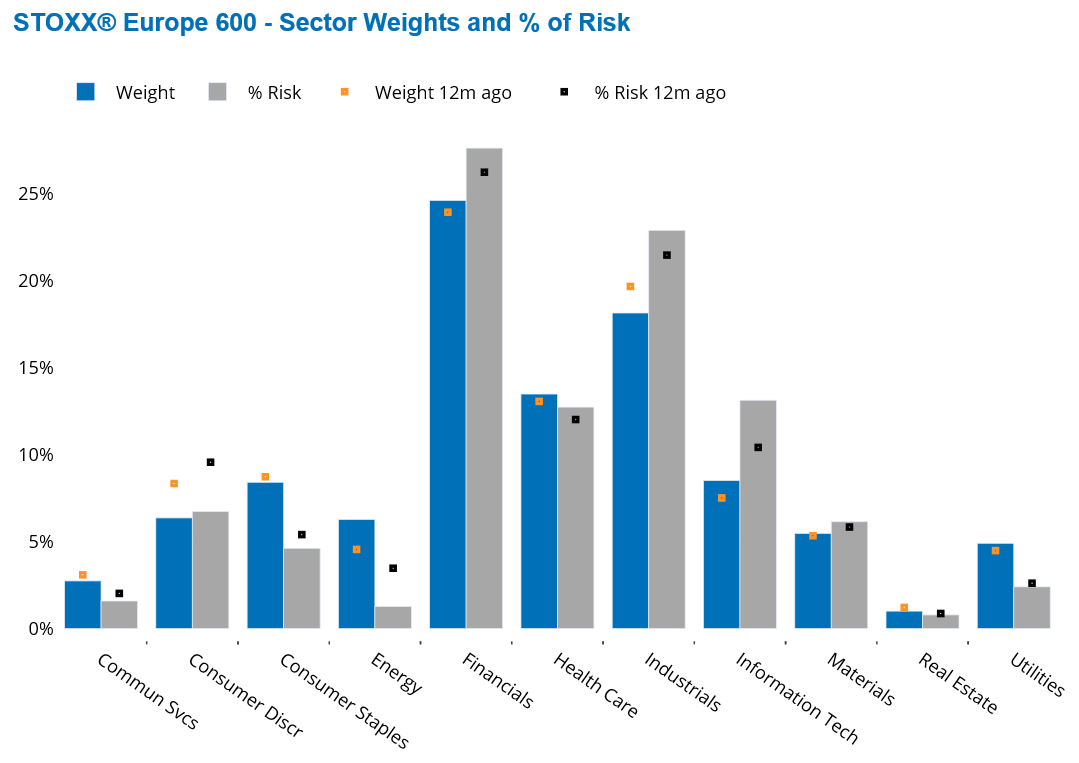
Energy’s rally also came with little added risk. Energy’s weight rose in 11 of the 12 markets, with the only exception being Emerging Markets. Yet its share of benchmark risk fell in all but China and Asia-Pacific ex-Japan, according to each market’s Axioma fundamental medium-horizon model. In every market, Energy now contributes less to risk than its weight in the index.
See chart from the STOXX Europe 600 Equity Risk Monitor as of October 30, 2026:
See chart from the STOXX UK Equity Risk Monitor as of October 30, 2026:
You may also like


