

MULTI-ASSET CLASS MONITOR HIGHLIGHTS
WEEK ENDED OCTOBER 23, 2026
AI financing concerns push 10-year Treasury yield back below 5%
Treasury yields declined for a third consecutive week in the week ending October 23, 2026, amid renewed worries over AI-related financing. The 10-year benchmark rate plummeted 17 basis points on Thursday in its biggest one-day drop since August 2024, as major US stock indices lost 1.2%, after Meta disclosed a sharp rise in its future lease and contractual commitments, deepening concerns over how the company and its peers will finance the AI buildout. On the same day, short-term interest rate futures also priced out almost an entire rate hike by the middle of next year, with the projected federal funds rate for June easing from 4.62% on Wednesday to 4.42% on Thursday.
Treasury yields have now followed share prices lower for a second week in a row, whereas long-term inflation expectations have barely moved, even as oil prices remain elevated on the back of the ongoing Middle East conflict. This divergence suggests that investor focus is shifting away from the inflationary effects of higher energy costs toward the potential economic damage posed by AI exuberance and persistent geopolitical risk.
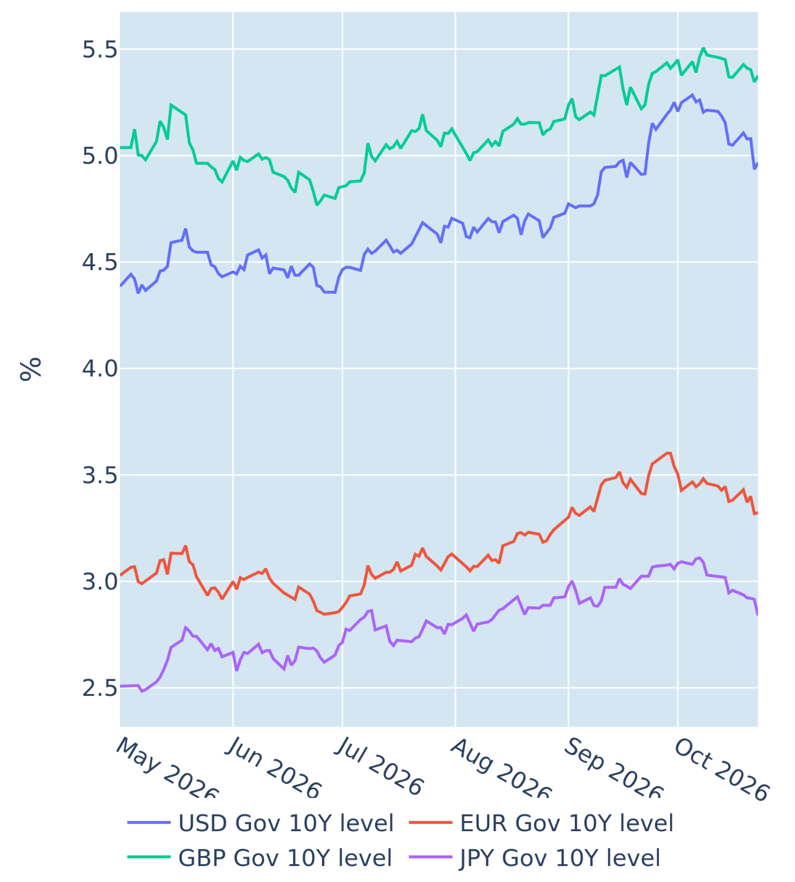
Please refer to Figure 4 of the current Multi-Asset Class Risk Monitor (dated October 23, 2026) for further details.
Euro bucks dollar weakness amid ongoing fiscal and cost-of-living crises
The dollar followed US rates lower against most of its peers last week, though European currencies bucked the trend, as cost-of-living protests and fiscal concerns kept troubling the continent. The euro fell 0.4% on the week, with the Swiss franc and Swedish krona also lower, even as most of the remaining G10 gained against their American rival.
The main focus was once again France, where investors awaited the latest credit assessment from rating agency Moody’s on Friday. The country’s 10-year borrowing rate closed above 5% for the first time in 24 years on Thursday, with traders bracing for a potential downgrade, as the country’s government debt burden reached nearly 120% of GDP in June. The move pushed the OAT-Bund spread to over 170 basis points, which marked the widest risk premium since its peak just above 180 basis points at the height of the Eurozone debt crisis in November 2011.
But there was some reprieve on Friday, when Moody’s maintained France’s Aa3 rating, one notch above Fitch’s and S&P’s A+, citing the budget agreement reached between the moderate left and the center-right as supportive of its assessment of French institutions. The spread narrowed to 165 basis points, easing the OAT yield back below 5% by the close of the trading week.
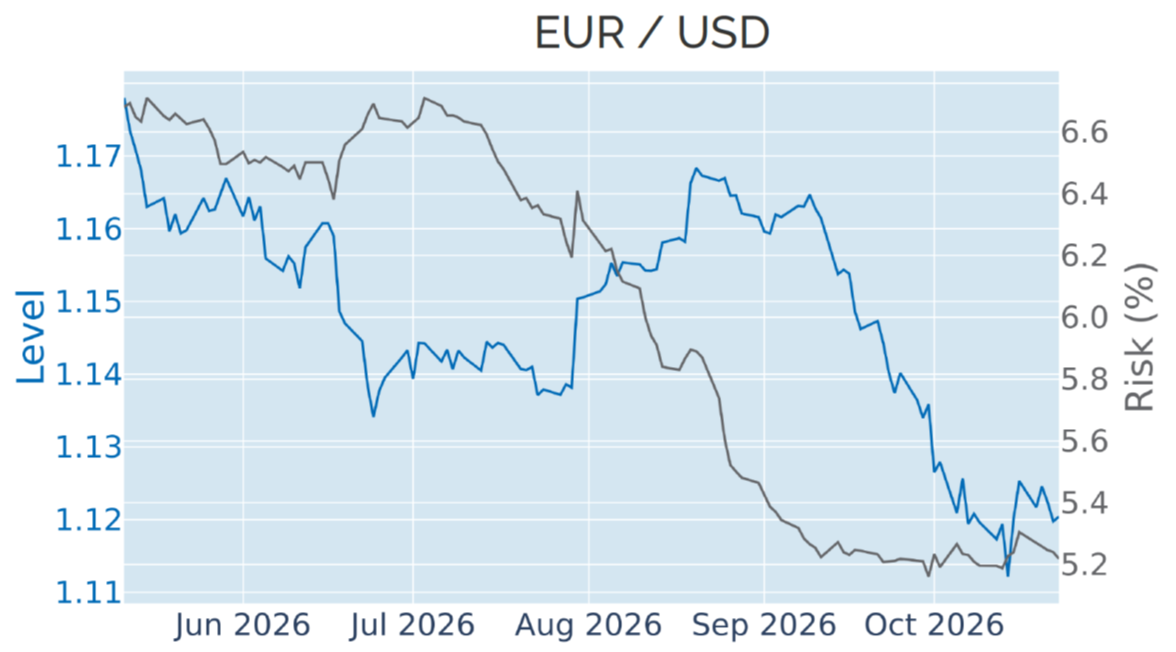
Please refer to Figure 6 of the current Multi-Asset Class Risk Monitor (dated October 23, 2026) for further details.
Near-zero correlations depress portfolio risk to pre-COVID low
Predicted short-term risk for the Axioma global multi-asset class model portfolio fell to 4.4% as of Friday, October 23, 2026, its lowest level since before the COVID pandemic in February 2020. The benign reading reflects weighted average asset-class correlations sitting at the lower end of their historical range, with cross-asset correlations among the major risk factors (interest rates, equities, and currencies) close to zero. Most of the remaining diversification benefit continues to come from oil, which remains the only asset class in the portfolio to actively reduce overall risk. US Treasury bonds, meanwhile, still add modestly to total portfolio volatility despite the sharp drop in yields over the past two weeks, reflecting their strong positive correlation with other sovereign and high-quality corporate bonds.
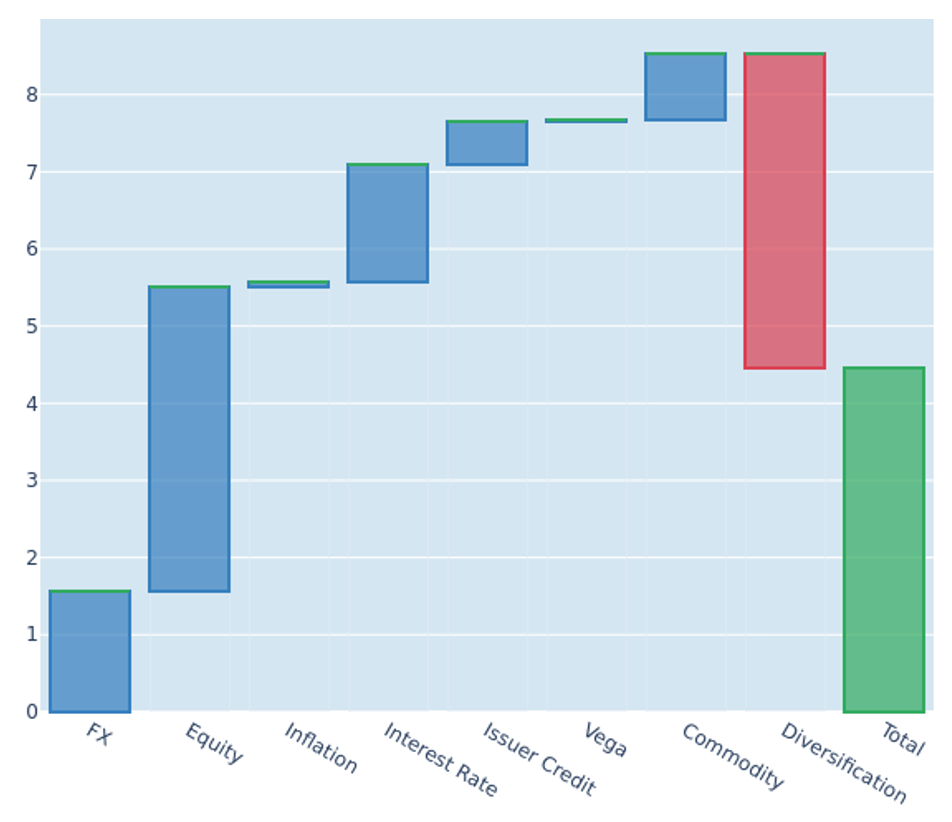
Please refer to Figures 7-10 of the current Multi-Asset Class Risk Monitor (dated October 23, 2026) for further details.
You may also like


